
About Us
Our Mission
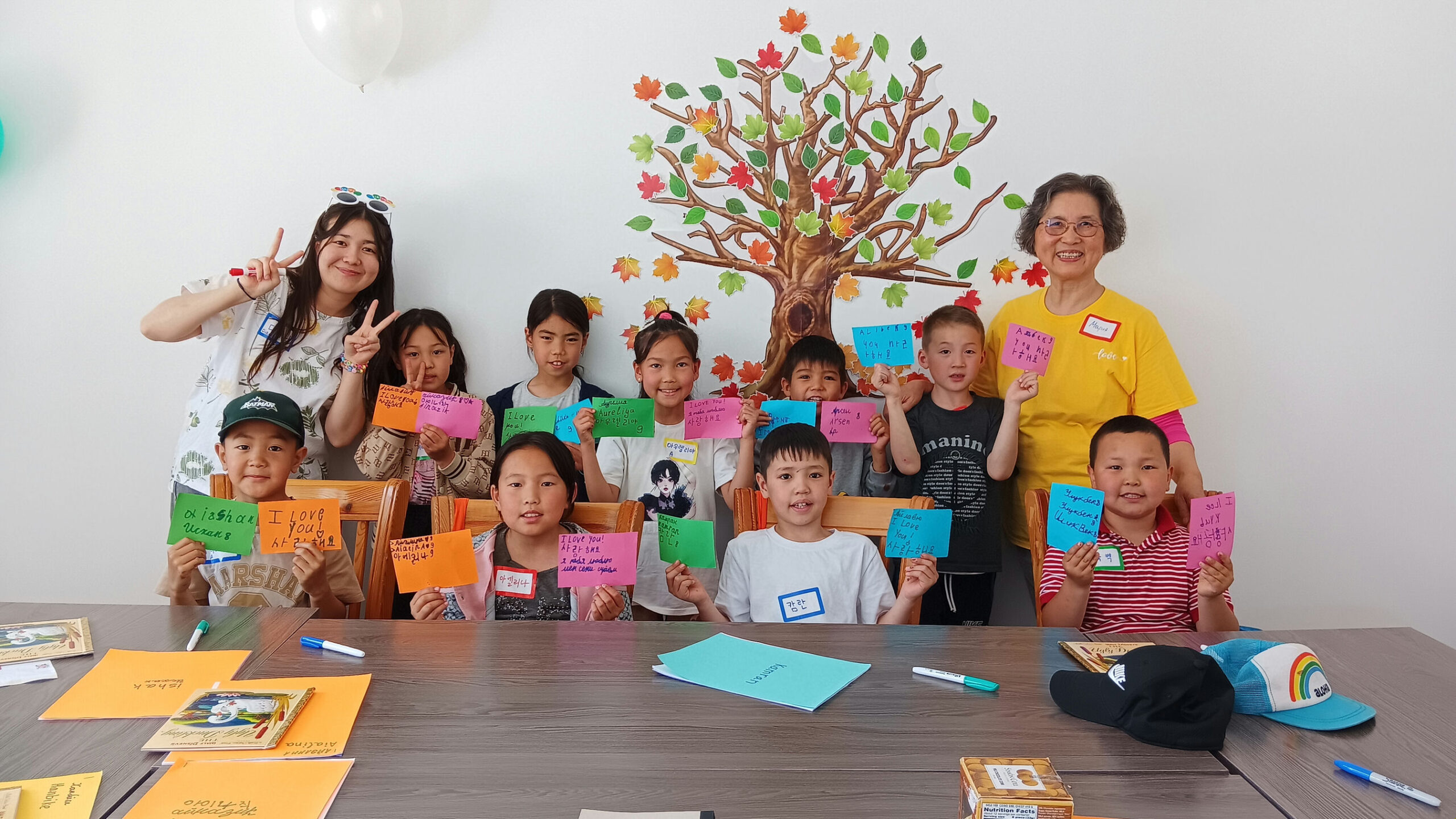
YMYT Center began in 2016, in a small village in Kyrgyzstan. “Үмүт” means “Hope” in the Kyrgyz language — and that is exactly what we aim to nurture in every child who walks through our doors.
We provide a safe space where children can learn, grow, and be respected. More than just a classroom, we are a place where each child’s potential can be discovered and developed.
We offer programs in English, Korean, Math, and IT, along with mentoring, parental seminars, a scholarship program, and camps. Through these programs, children and their families grow together, building a stronger community.
Founder's Story
I wanted to live a life for others. Even just the thought of it made me happy.
What moved my heart most were those living on the streets, and children born into poverty. Perhaps it was my mother’s influence — I still remember her praying with tears at our family table for orphans and children in need.
When I first visited this village, my heart was drawn to the children. I wanted to give them opportunities. I believed education could be a powerful tool — a way to open doors and break through the limits of poverty.
That belief wasn’t wrong. But over time, something shifted in how I see the world. I came to realize that success doesn’t guarantee happiness, and poverty doesn’t necessarily mean misery.
What we do at the center hasn’t changed — but the motivation behind it has. Yes, education matters. But our purpose was never just about academics. It was never about showing children how to escape poverty. What matters most is that children learn to be happy — and to become better members of their families and communities.
We teach children to accept one another, to live alongside those who are different from them, and to be patient. In truth, I’ve learned as much from them about patience and acceptance as they’ve ever learned from me. In that way, the children are my teachers.
That does not mean we do not hope for their success. When children pursue what the world calls “success,” they discover goals for their lives. And when those goals become clearer, their passion grows. That, too, is something we celebrate.
I believe every person carries a debt of love toward their neighbor. We all survive because someone, somewhere, sacrificed for us.
There’s a quote often attributed to the anthropologist Margaret Mead: “The first sign of civilization is a healed femur.” In nature, a broken leg is a death sentence. A healed femur means someone stayed behind — someone carried food, provided protection, and cared for another person until they could walk again. That, Mead suggested, is where civilization begins. Helping the vulnerable is not just a moral virtue — it is humanity’s oldest and most fundamental strength.
I stand on the shoulders of parents, mentors, and countless others whose love and sacrifice paved the way for me. Compassion for others may be humanity’s oldest and most powerful strength — and, though I can’t speak for everyone, I’ve come to believe that the secret to happiness begins there.
Over 10 years, we have walked alongside these children through moments of discipline and gentleness, challenge and encouragement. And along the way, children who make us proud have begun to emerge.
One child once told us, through tears: “No one ever praised me in my entire life. For the first time, a teacher told me I did well.”
After a parenting seminar at the center, one child said: “My mom started hugging me so much after the seminar — it’s actually kind of awkward and overwhelming.” A complaint that wasn’t really a complaint.
M, a student who earned the Presidential Award and appeared on national television, proudly told us she had mentioned about us (the teachers) on the broadcast. B, who introduces us to everyone as “my Korean parents,” is already in her third year of university.
At the end of a girls’ seminar led by Teacher K, she asked: “Is there anyone here who would like a hug?” One girl walked to the front, wrapped her arms around the teacher, and cried for a long time. We believe that moment was one of healing and restoration for that child.
The children say: “I’m happy when I’m at the center.”
When I compare the faces of the children I first met in this village with who they are today — they are the same children, yet entirely different. Their expressions tell the story of transformation.
These brighter faces are our compass. They are the story we are living. They tell us whether we are walking the path we were meant to walk. As long as these children are here, our work carries meaning — a small light worth sharing.
“I, too, am happy to be in this village.”